Introduction
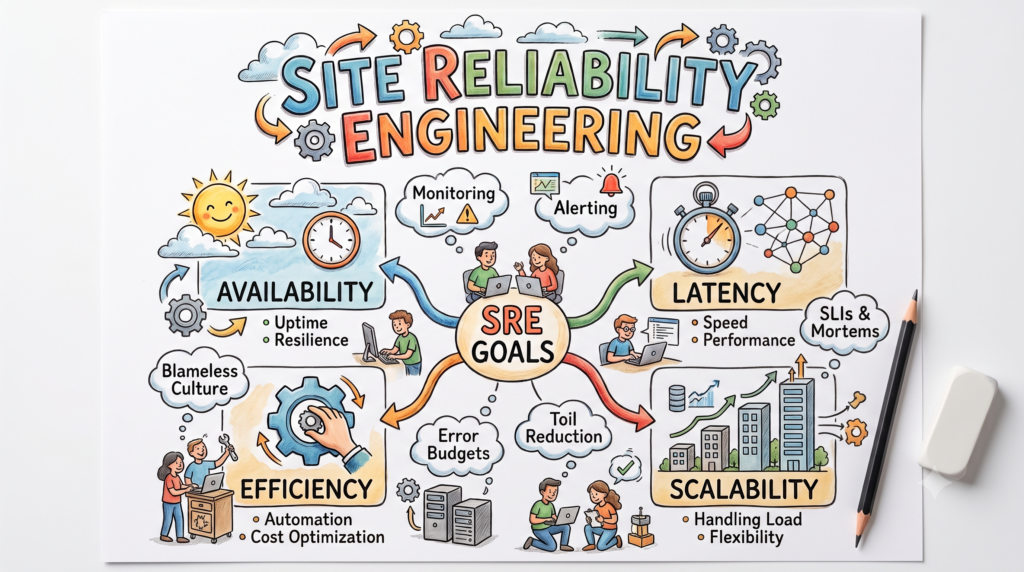
Modern software needs to stay online all the time. When apps crash or load slowly, users get angry and leave. Companies lose money when their digital platforms stop working. This is why teams now focus heavily on keeping systems stable.
Site Reliability Engineering treats operations like a software problem. Engineers write code to automate tasks instead of doing everything by hand. They build tools that heal systems when errors happen. The team at https://www.sreschool.in/
runs a focused learning platform for engineers. It covers cloud reliability, automation, monitoring, and production operations in simple steps.
Anyone can learn these skills with steady practice. You start with small steps and build real experience over time. Good training gives you hands-on practice with real systems so you can work with confidence.
SRE Training: A Practical Path to Modern Operations Expertise
You cannot master modern cloud operations by just reading slides. Practical SRE Training gives you direct access to live systems. You see how real applications act under heavy network load. This hands-on work builds true technical skill.
Engineers learn how small bugs can bring down whole clusters. During training, you fix simulated outages in safe test labs. You set up networks, test connections, and track errors across systems. This practice helps you stay calm when a real system breaks.
- Hands-on Outage Drills: Fix simulated service crashes in a safe lab environment.
- Infrastructure Code: Use code to build servers and networks without manual setup errors.
- Production Checks: Test your apps against clear health standards before sending them live.
You also learn to spot bottlenecks before users notice them. Training shows you how to track memory leaks and slow database queries. This keeps production platforms fast and dependable every single day.
SRE Certification: Validate Your Skills and Advance Your Technology Career
Earning a solid credential proves that you can run production workloads. Most hiring managers look for certified talent when they fill senior infrastructure jobs. A verified SRE Certification shows that you understand error budgets, root cause analysis, and modern monitoring tools.
Getting certified helps both beginners and experienced pros. It gives you an edge during job interviews and opens doors to top-paying roles. It also confirms that you know how to stop small failures from turning into massive outages.
| Career Level | Main Skills Learned | Next Job Roles |
| Beginner Level | Basic alerts, Linux basics, shell scripts, simple logs | Cloud Support, Junior DevOps |
| Mid Specialist | SLO metrics, error budgets, postmortems, Kubernetes pods | SRE Engineer, Systems Lead |
| Lead Architect | Multi-region setups, disaster recovery, platform design | Principal Architect, SRE Manager |
A recognized certificate validates your everyday problem-solving skills. It proves to team leads that you can manage critical systems under pressure.
SRE Course: A Complete Learning Roadmap for Beginners and Professionals
Learning distributed infrastructure takes a clear, step-by-step path. A structured SRE Course guides you from basic terminal commands to advanced cloud platforms. Taking it one topic at a time keeps you from feeling overwhelmed.
You begin by studying Linux internals and core network traffic. Next, you learn how to package code into containers and manage them with orchestration tools. Finally, you write automated scripts that restart failing services automatically.
- Step 1: System Basics: Learn Linux performance commands, disk checks, and shell scripts.
- Step 2: Containers: Package code into containers and run them on Kubernetes clusters.
- Step 3: Auto Recovery: Write simple code that spots crashes and reboots broken nodes fast.
This clear roadmap helps you build real confidence. You practice each step until the ideas become second nature. By the end, you are ready to manage production cloud estates on your own.
Site Reliability Engineering Training: Master the Core Concepts, Practices, and Tools
Good reliability work relies on real numbers, not wild guesses. Through Site Reliability Engineering Training, you learn how to measure user pain with clear data. You set Service Level Indicators, Service Level Objectives, and Service Level Agreements.
These metrics create clear targets for the whole team. They show whether your app is fast enough for your customers. You also learn how to track uptime percentages so you know when systems need attention.
- Real User Metrics: Measure exact page load speeds and API errors that hit real users.
- Error Budgets: Use a set pool of allowed downtime to balance risk and fast updates.
- Live Dashboards: Put core health numbers on big screens so teams spot trends early.
Error budgets remove friction between developers and operations staff. When the budget is full, devs can ship features fast. When the budget drops, everyone works together to fix bugs and stabilize the platform.
Site Reliability Engineering Certification: Understanding the Evolution of Modern IT Operations
Old IT setups relied on slow manual checklists and ticket queues. Today, modern web apps ship code multiple times a day. Earning a Site Reliability Engineering Certification shows that you know how modern teams deploy code without breaking existing features.
Modern teams use automated tests instead of human approval boards. You write scripts that check health signals before, during, and after every release. If an update causes errors, your tools roll it back right away without waking up an engineer at night.
- Modern Workflows: Move away from manual changes toward automated code templates.
- Fast Verification: Run automated health tests on every new code build before it goes live.
- Shared Ownership: Get developers and ops teams to work as one unified team.
This shift helps companies move faster and stay stable at the same time. You learn how to build pipelines that test code in minutes. This keeps systems safe while helping businesses release new features quickly.
SRE Tutorial: Essential Technologies for Smarter and Automated Operations
Learning through simple tutorials gives you hands-on experience without complex theory. A good SRE Tutorial walks you through setting up monitoring tools, writing alert rules, and deploying test clusters. You follow clear steps in an isolated lab where you cannot break anything.
You see how to configure agents that read log files continuously. You also learn how to route alerts to chat apps so the on-call engineer gets notified in seconds. These simple lessons teach you the exact steps used by engineers in top tech companies.
- Collect Metrics: Install lightweight collectors to track memory, CPU, and disk usage.
- Build Alerts: Set up alerts that trigger only when real user journeys fail.
- Run Automation: Connect alert hooks to simple scripts that clear logs or restart stuck processes.
Practicing these steps turns confusing tools into simple habits. You learn how each tool talks to the next. Soon, setting up monitoring stacks feels easy and straightforward.
SRE Tools: Building Expertise in Continuous Delivery and Engineering Excellence
Every reliability engineer uses a core toolset to keep platforms running. Today, many open-source SRE Tools help you observe traffic, provision cloud servers, and run chaos experiments. Learning the right tool for each job saves hours of wasted effort.
Observability tools like Prometheus and Grafana show you what is happening under the hood. Tools like Terraform build cloud networks from clean code files. When you tie these tools together, you create a system that alerts you to trouble before users even notice.
| Tool Group | Popular Tools | What It Does Simply |
| Monitoring | Prometheus, Grafana | Collects health data and draws clean visual charts |
| Cloud Setup | Terraform, Ansible | Sets up servers and networks using simple text files |
| App Runners | Kubernetes, ArgoCD | Keeps container apps running and restarts them on failure |
| Chaos Tests | Chaos Mesh, Gremlin | Injects small faults on purpose to test system safety |
Using these tools properly stops human errors. You write your setup down once, check it into Git, and let automation do the heavy lifting.
SRE Best Practices: Developing Skills for Intelligent and Automated IT Operations
Reliability is an everyday habit, not a quick project you finish in a week. Adopting proven SRE Best Practices helps your platform survive power cuts, cloud glitches, and sudden traffic spikes. Top teams work hard to remove repetitive manual tasks, which they call toil.
Another key practice is running blameless postmortems after an outage happens. Instead of blaming the person who typed the wrong command, the team looks at the system. You ask why the system allowed that command to run in the first place.
- Limit Toil: Spend half your work time building automated tools rather than doing routine tasks.
- Blameless Reviews: Look at broken systems and missing safeguards without blaming people.
- Graceful Fallbacks: Build backup pathways so the core app works even if side features fail.
This approach creates a healthy team culture where people speak up openly. When no one fears blame, engineers report issues early. That open feedback helps the team make the platform stronger every week.
SRE Engineer: Your Roadmap to Scalable Machine Learning Operations
The rise of machine learning models has created a huge need for the modern SRE Engineer. Running AI workloads brings new operational challenges. Models can slow down, data feeds can freeze, and expensive GPU chips can run out of memory without warning.
Reliability engineers make sure these data pipelines run smoothly all day. They set up auto-scaling for GPU servers and monitor model response times. They also ensure that models get fresh data without crashing downstream apps.
- Data Pipelines: Keep data ingestion jobs running smoothly during traffic surges.
- Model Latency: Track how fast models answer user queries and spot slow responses early.
- GPU Cost Control: Scale expensive compute chips up during work hours and down at night.
Mastering these skills makes you valuable to cutting-edge AI teams. You keep critical model pipelines fast, stable, and cost-effective.
SRE Training in India: Strengthening Modern Data Management and Delivery Skills
India hosts thousands of fast-growing tech teams, payment networks, and digital services. Because of this growth, the demand for SRE Training in India is growing fast. Top companies in cities like Bengaluru, Hyderabad, and Pune actively search for engineers who know how to keep large cloud apps online.
Startups and enterprise teams need to protect their services from downtime. Practical training programs teach local engineers how to handle massive user loads. Engineers learn international operational standards that help them run platforms used by millions of people across the globe.
- High-Traffic Design: Learn to build architectures that stay fast under massive user traffic.
- Career Growth: Move out of basic server support into high-paying platform engineering roles.
- Practical Work: Build projects that solve real operational problems using modern cloud tools.
Structured training gives you the exact skills top employers look for. You build real projects and prove your abilities on production systems.
Frequently Asked Questions About sreschool
What skills do I need before joining SRESchool?
You only need basic familiarity with Linux commands, basic computer networking, and simple scripting using Python or Bash. If you know a little about containers or cloud platforms, that helps, but instructors cover all core ideas step by step.
How is Site Reliability Engineering different from DevOps?
DevOps is a team philosophy about breaking down walls between developers and operations teams. Site Reliability Engineering is a concrete way to make that happen by using software code, error budgets, and metrics to reach clear goals.
What job roles can I apply for after this training?
You can apply for roles like Site Reliability Engineer, Cloud Platform Engineer, Junior DevOps Engineer, and Infrastructure Specialist at startups and large tech firms.
Do students get real hands-on lab access?
Yes, you spend most of your time in live lab sandboxes. You practice installing tools, building clusters, and fixing simulated outages in real cloud setups.
What is an error budget in plain English?
An error budget is the small amount of downtime an app can have without hurting users. If your budget is safe, you can push updates quickly. If errors eat up the budget, you pause releases and fix bugs first.
Why are blameless postmortems so important?
They create a safe environment where engineers discuss failures openly. When you focus on broken code and missing safeguards instead of blaming people, you fix the true root cause and prevent the same outage from happening again.
What projects will I build during the coursework?
You will build automated monitoring dashboards, set up Kubernetes clusters, write custom health scripts, and practice automated failover drills across multiple regions.
How often does the platform update the curriculum?
Active engineers review and update the lessons on a regular basis. They add new open-source tools and update guides to match current industry practices.
Do tech companies value these certifications?
Yes, hiring managers value certifications that test practical operational skills. Earning one proves that you can run production systems and solve real problems without panic.
Can companies train their entire engineering team here?
Yes, companies can request custom training modules built around their specific tech stack. This helps corporate teams adopt modern automation habits much faster.
Moving Forward
Modern cloud systems are too big and complex for manual operations. Using slow checklists and doing manual tasks leaves systems vulnerable to outages. Adopting a software-first approach to reliability helps you keep applications stable, secure, and blazing fast.
Focusing on automation, clear metrics, and smart monitoring lets your team ship features without fear. Learning these skills is the best way to grow your engineering career. Platforms like sreschool.in give you the structured steps, real labs, and practical guidance you need to become a trusted reliability specialist.