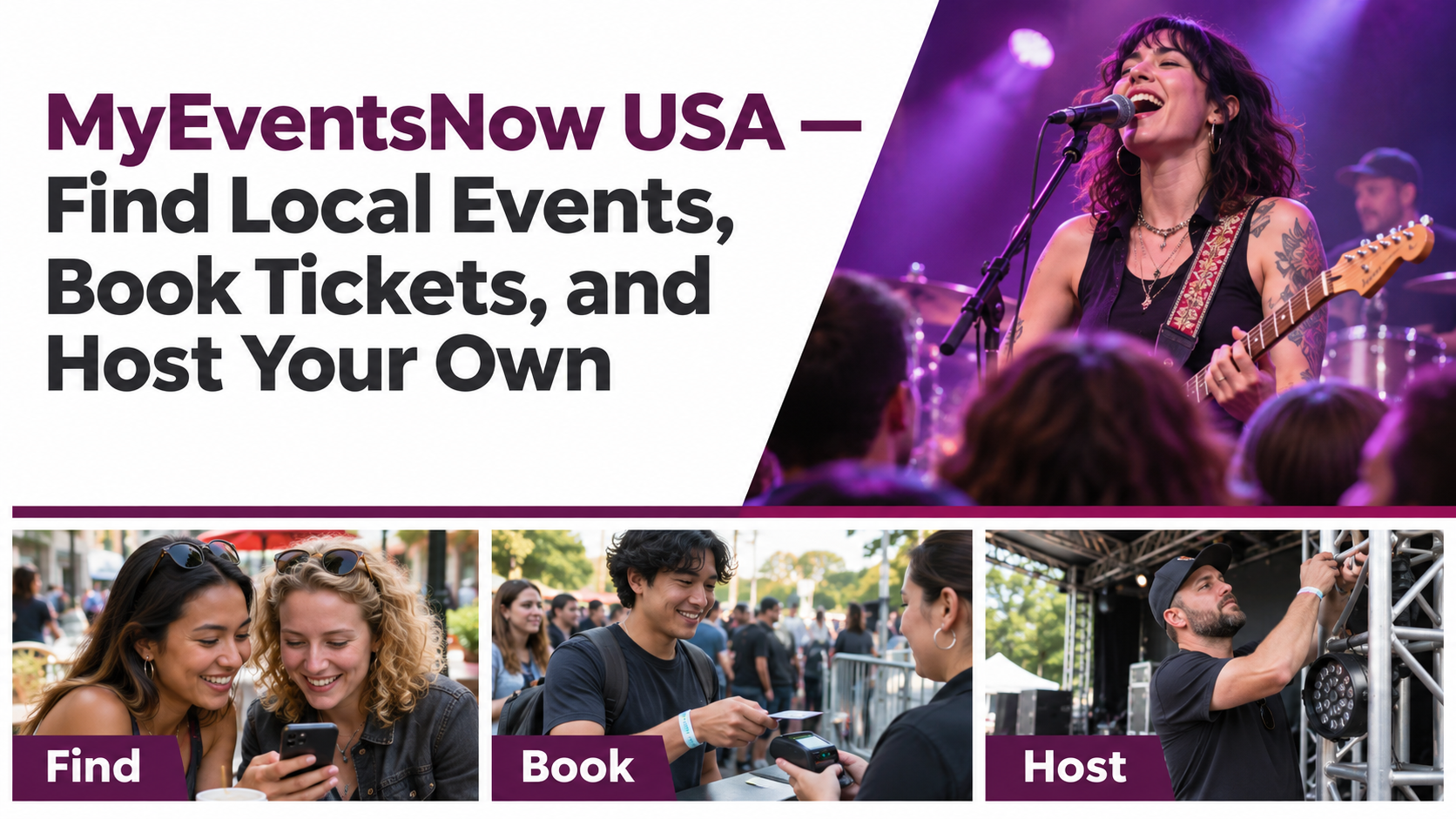
Every successful event starts with an idea.
An organizer may want to arrange a music festival, a professional conference, a training workshop, or a community celebration.
But turning that idea into a real experience requires careful planning.
The organizer needs to select a venue, prepare event information, create admission options, attract attendees, and manage registrations.
Visitors have their own expectations. They want to discover interesting events, understand the available options, and complete bookings without confusion.
Digital event platforms help connect these activities.
They support event discovery and provide organizers with tools for publishing and managing events. They can also simplify parts of the ticketing and registration journey.
This article examines the role of digital platforms in the American event industry. It explores attendee needs, organizer workflows, ticketing, registration, event promotion, and management.
The Changing Way People Discover Events
People have many ways to learn about events.
They may receive recommendations from friends, follow organizers on social media, read local announcements, or search online.
Digital discovery adds another way to explore activities.
Visitors can search for events based on their interests and preferred locations. They can also review event information before deciding to attend.
Why clear event information matters
People need answers before making a booking.
They want to know:
- What is the event about?
- Who should attend?
- When does it happen?
- Where is the venue?
- What does admission cost?
- How can they register?
- What conditions apply?
Organizers should answer these questions through their listings.
A complete description helps visitors understand the event. It also gives organizers a clearer way to communicate expectations.
1. Online Event Ticket Booking USA and the Digital Attendee Journey
Online Event Ticket Booking USA connects event discovery with available registration and ticket purchase options.
Visitors can explore event listings and review important details before booking.
The attendee journey
A typical attendee journey includes five stages.
Discovery: The visitor searches for an event.
Evaluation: The visitor reviews its description, date, venue, and audience.
Selection: The visitor compares admission categories.
Booking: The visitor follows the registration or payment process.
Preparation: The visitor saves confirmation details and reviews entry instructions.
Every stage needs clear information.
What organizers should improve
Organizers should use accurate event titles and descriptions.
They should explain ticket categories and registration conditions.
They should also provide clear venue and schedule details.
If the event changes, organizers should communicate updates as soon as possible.
2. Understanding Demand for Upcoming Events in USA
Different audiences look for different types of experiences.
Event organizers should understand these interests before planning promotional activities.
Entertainment audiences
Music lovers may search for concerts and festivals.
Comedy fans may prefer live shows. Theatre audiences may look for performances and cultural programs.
Professional audiences
Business professionals may search for conferences, networking sessions, and trade exhibitions.
These events can support knowledge sharing and professional connections.
Learning audiences
Students and working professionals may explore workshops, training sessions, and educational programs.
Organizers should explain the topics and intended audience.
Community audiences
Local visitors may prefer food festivals, cultural celebrations, exhibitions, and public gatherings.
Community events can also help local businesses and creators reach people.
Plan events around audience needs
Before publishing an event, identify its target audience.
Understand what visitors expect. Prepare a schedule and description that explain the experience clearly.
Avoid making claims that the event cannot support.
3. Local Discovery and Events Near Me
Location affects event decisions.
People may prefer activities close to their homes, workplaces, or travel destinations.
Events Near Me searches help visitors explore activities around a selected location.
How organizers can support local discovery
Organizers should provide complete venue details.
They should include the city and relevant location information in the event description.
They should also explain parking, public transport, and accessibility details when available.
How visitors can evaluate nearby events
Compare the distance and schedule.
Check whether the venue suits your travel plans.
Review the event’s entry requirements and registration conditions.
A local event still needs careful planning.
4. New York City as an Example of a Diverse Event Market
New York City provides a useful example of a place with many different event interests.
Visitors can explore entertainment, arts, culture, business, and educational activities.
Entertainment and performance
Concerts, theatre programs, comedy shows, and music festivals attract different audiences.
Organizers should share performer information and venue details.
Professional events
Conferences and networking sessions connect people from different industries.
Clear descriptions should explain the subject, audience, schedule, and registration process.
Arts and culture
Exhibitions, creative workshops, and cultural celebrations help people explore different experiences.
Community gatherings
Food festivals and neighborhood activities offer opportunities for local participation.
Planning around the city
Visitors should confirm the venue address and allow enough travel time.
Organizers should provide accurate location information to reduce confusion.
5. Concert Tickets USA: A Major Part of Live Entertainment
Concerts create experiences that bring artists and audiences together.
People searching for Concert Tickets USA may compare different performers, venues, and admission options.
What attendees should understand
Ticket categories may differ between events.
Some venues offer general admission. Others provide reserved seats or special admission arrangements.
Visitors should review the ticket description carefully.
They should also check additional charges, entry requirements, and cancellation conditions.
What organizers should communicate
Organizers should clearly explain:
- Performer information
- Event date and time
- Venue details
- Admission categories
- Ticket conditions
- Entry instructions
- Relevant contact information
Accurate information helps attendees prepare for the event.
6. Choosing an Event Ticketing Platform USA for Your Business
An Event Ticketing Platform USA can support event publishing and ticket-related activities.
However, different organizers have different requirements.
A small workshop may need basic registration tools. A large festival may require several admission categories and more detailed booking management.
Evaluate the platform’s capabilities
Publishing: Can you create and update event listings?
Ticketing: Can you configure suitable admission categories?
Registration: Can you collect attendee information?
Booking records: Can you review available booking details?
Communication: Can you share event updates?
Support: Can you access help when problems arise?
Compare costs and conditions
Review subscription fees, transaction charges, payment options, and refund rules.
Check the platform’s terms and available support.
Do not assume every platform offers the same capabilities.
Choose based on your event requirements.
7. Event Registration Software USA and Attendee Data Management
Registration gives organizers information about expected attendance.
Event Registration Software USA can help collect and organize attendee details through digital forms and related tools.
Registration for different event types
A workshop may need names and email addresses.
A conference may need ticket categories and session preferences.
A community event may need only basic registration information.
The organizer should decide what information the event actually requires.
Common software capabilities
Depending on the product, organizers may find:
- Registration forms
- Attendee information collection
- Ticket or registration categories
- Booking records
- Registration status tracking
- Confirmation messages
- Attendee lists
- Basic reports
Responsible information handling
Collect only necessary information.
Explain why you need each detail. Restrict access to authorized team members.
Follow applicable privacy requirements and the platform’s data-handling rules.
8. Creating a Ticket Sales Strategy
Organizers need more than a ticket purchase link.
They need an event that offers clear value to its intended audience.
Here is a practical approach to Sell Event Tickets Online.
Understand your audience
Identify who may attend the event.
Consider their interests, location, schedule, and expectations.
Create a clear event offer
Explain what visitors can expect.
Describe the main activities, speakers, performers, or learning opportunities.
Set suitable admission options
Choose ticket categories based on the event format.
Explain what each category includes.
Choose the right service
Compare ticketing features, fees, payment options, and booking conditions.
Promote through relevant channels
Use suitable social media channels, email, community groups, and business networks.
Share accurate details and direct visitors to the available booking process.
Monitor event activity
Review registrations and available booking records.
Communicate changes promptly.
9. Event Visibility: How to List Your Event Online USA
Organizers need people to discover their events.
A well-prepared listing can help communicate the event’s purpose and attract relevant visitors.
Businesses, nonprofits, educational institutions, and independent promoters can List Your Event Online USA.
Create a complete event profile
Include:
- Event title
- Event category
- Main description
- Date and time
- Venue details
- Ticket information
- Organizer details
- Registration instructions
- Contact information
Make the description useful
Start with the main purpose.
Explain what attendees will experience. Identify the intended audience.
Add the schedule and important instructions.
Use relevant keywords naturally. Do not repeat the same phrases unnecessarily.
Maintain listing quality
Check spelling, dates, venue details, and ticket information.
Update the listing when plans change.
A complete and accurate listing helps visitors understand the event.
10. Event Management Software USA: Coordinating the Entire Event
Event Management Software USA can support different parts of the event workflow.
Organizers may use digital tools for event creation, publishing, ticket configuration, registration, communication, and reporting.
The event management cycle
Planning: Define the purpose, audience, budget, date, and venue.
Preparation: Create the schedule and prepare event information.
Publishing: Share the listing and available admission options.
Registration: Collect and review attendee information.
Coordination: Communicate with attendees and prepare event arrangements.
Review: Examine available booking records and gather feedback.
Example: A technology conference
A technology company plans a conference for software professionals.
The team chooses the venue and prepares the schedule.
It then creates the event listing and configures registration categories.
Visitors review the information and register through the available process.
The organizer monitors registrations and shares updates.
Before the conference, the team checks the venue and attendee arrangements.
After the event, it reviews available information and identifies improvements for future programs.
Choose software with a clear purpose
List your event management needs before selecting a tool.
Compare the features with your team’s actual workflow.
Consider ease of use, costs, support, and data handling.
A suitable system should help your team manage tasks without adding unnecessary complexity.
How MyEventsNow USA Supports the Event Marketplace
An event marketplace needs to serve both attendees and organizers.
Attendees want to discover suitable activities and review booking options. Organizers want to publish events and manage registration workflows.
MyEventsNow USA brings event discovery, ticket booking options, event publishing, and organizer tools together.
Visitors can explore event categories and locations. Organizers can review available features for publishing event information and managing booking activities.
The platform aims to connect event organizers, businesses, entertainment providers, and attendees across the United States.
Explore the platform at MyEventsNow USA.
Review the current features, service conditions, and organizer terms before using the platform.
Frequently Asked Questions
1. How does online event ticket booking support attendees?
Online booking gives visitors a digital way to explore events and access available ticket or registration options. They can review event details before following the organizer’s booking process.
2. Which events can people discover across the USA?
People can search for concerts, festivals, workshops, conferences, exhibitions, comedy shows, cultural programs, and community activities. Available listings depend on location and organizer activity.
3. How can local event searches help visitors?
Location-based searches help people explore activities around a selected area. Visitors can compare nearby listings and review venue details, schedules, and registration requirements.
4. Why do people search for events in New York City?
New York City offers entertainment, cultural, educational, and professional activities. Visitors can explore concerts, theatre, exhibitions, workshops, business gatherings, and community celebrations.
5. What information matters when buying concert tickets?
Check the performer, date, venue, admission category, total cost, and entry rules. Review cancellation conditions and save your booking confirmation.
6. How can an event ticketing platform help a business?
A ticketing platform can help a business publish event details and manage ticket-related activities. Available features may include admission categories, booking records, registration tools, and promotional workflows.
7. How can registration software support attendee management?
Registration software can collect attendee information and organize registration records. Depending on the product, it may also support forms, confirmation messages, attendee lists, and reports.
8. What should organizers do before selling tickets online?
Organizers should define the event, identify the audience, confirm the venue and schedule, prepare admission categories, and choose a suitable ticketing service. They should also publish accurate information.
9. Why should organizers list their events online?
Online listings create another way for potential attendees to discover an event. A clear listing explains the purpose, location, schedule, and registration process.
10. How does event management software support organizers?
Event management software can help organize event creation, publishing, ticket configuration, registration, communication, and booking records. Its usefulness depends on the available features and event requirements.
Final Thoughts
Digital event platforms help connect people with experiences and organizers with potential audiences.
Attendees need clear information and convenient booking options. Organizers need practical tools to publish events, manage registrations, and communicate with visitors.
A suitable platform can support these activities through an organized workflow.
However, good event management still depends on planning. Organizers must prepare accurate information and understand their audience. Attendees must review event details before booking.
When both sides follow a clear process, digital event tools can make event discovery and organization easier.
Explore MyEventsNow USA: https://myeventsnow.us/